
Introduction:
For most of its 478 years of existence and operation, the Royal Navy has been considered to be among the most formidable of foes. The experiences and lessons that the Royal Navy has gathered over its half a millennium render it an exceptionally capable navy. If one is to judge solely on the quality of crew, to the exclusion of all other considerations, it would be a safe wager that no armed maritime force on Earth is better than the Royal Navy.
However, despite its hallowed traditions and its world-changing victories, the Royal Navy in 2024 is a shadow of a shadow of what it used to be.
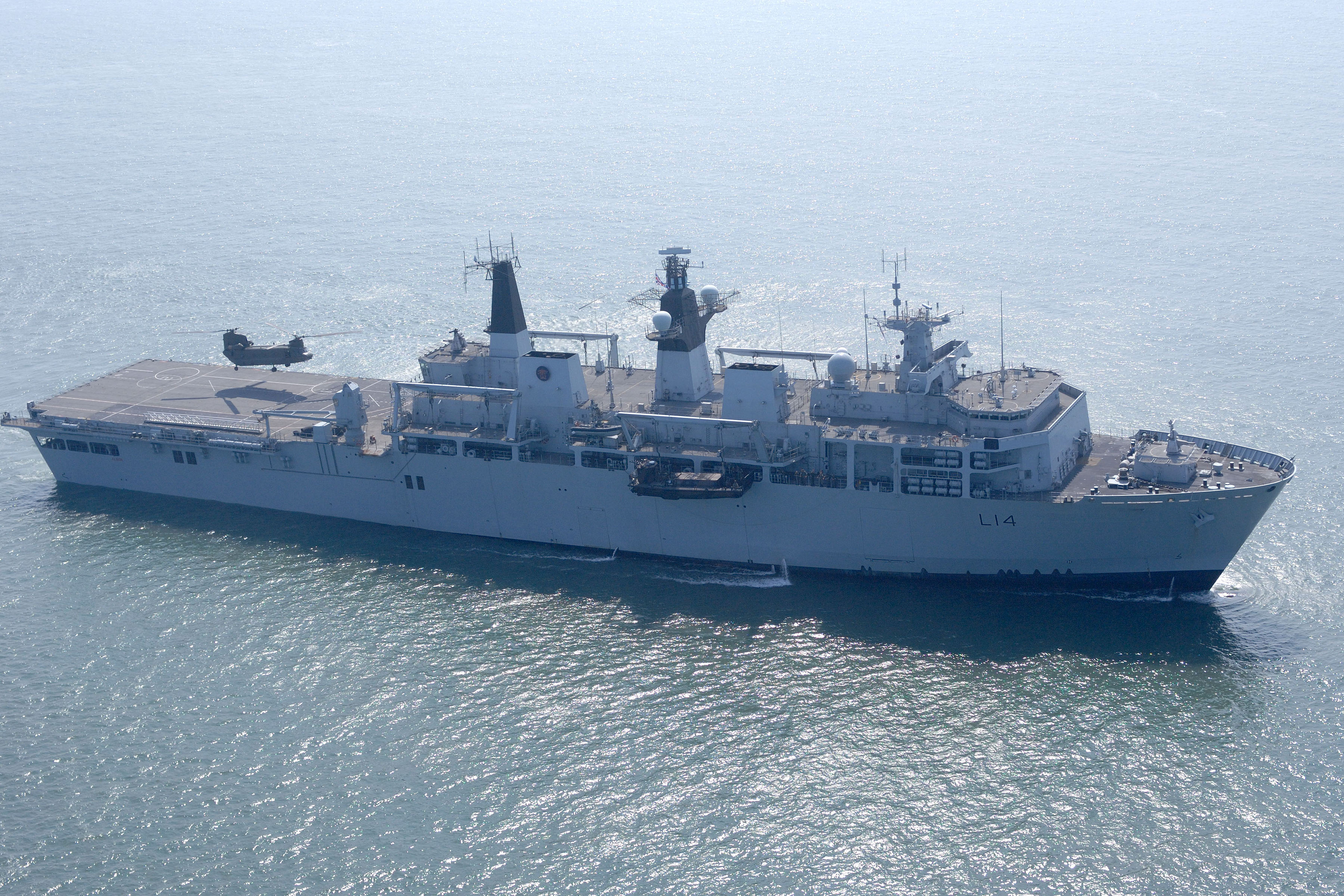
Today, on the 21st of November 2024, it has been announced that 5 ships – ships that are exceedingly important in any navy – will be scrapped or sold off within the next year or so. However, as pointed out by Naval Lookout, this shouldn’t come as a surprise. These ships have been inactive for some years already. In the case of HMS Northumberland, for instance, it is because a refit and repair of the hull is deemed economically unviable. But the story of the 2 Albion-class LPDs, HMS Bulwark and HMS Albion, is a rather more depressing one. It is the same story as that of RFA (Royal Fleet Auxiliary) Wave Ruler and RFA Wave Knight.
The Royal Navy simply doesn’t have the manpower required to crew them. All 4 of these ships, however, have been inactive for some time. The sad part, however, is that even though they are now being struck off the roster of active duty ships, the frontline strength of the Royal Navy will be unaffected.
An overview of the Royal Navy’s active duty frontline vessels and submarines:
At present, the Royal Navy can deploy two aircraft carriers (both of the Queen Elizabeth-class), 4 out of 6 Daring-class destroyers, 7 out of 9 Duke-class frigates, 3 out of 4 Vanguard-class SSBNs and 2 out of 5 Astute-class SSNs.
While the Royal Fleet Auxiliary’s ships are not combat vessels, they are vital to the continued functioning of the Royal Navy in a combat zone. The RFA’s fleet too, however, is being gutted. The Wave-class of fast tankers is gone. 2 out of 4 of the Tide-class fleet tankers (which are less than 7 years old!) are operational. Out of the 7 tankers available to the RFA, only 3 can currently be deployed.
In the ongoing Red Sea Crisis, the Royal Navy deployed 30% of its destroyers – HMS Diamond and HMS Duncan – and 30% of its available frigates – HMS Richmond and HMS Lancaster. To provide a comparison, the Indian Navy – in the same region and during the same conflict – deployed 4 destroyers that are comparable in capability to the Darings alongside nearly a dozen frigates (multiple classes) and large off-shore patrol vessels (specifically the Saryu-class). Though the Royal Navy’s deployment demonstrated their crews’ and ships’ sheer ability when they shot down multiple Houthi drones and missiles, the small deployment betrays the Royal Navy’s single biggest weakness.
When are the next ships being commissioned?
Of course, the Royal Navy is not sitting still. Though successive governments have systematically slashed its active duty ships, they have been ever-so generous in green-lighting the construction of more modern hulls as replacement. Between 2026 and 2030, the Royal Navy will receive its newly-built City-class frigates – 8 of them. Between 2027 and 2032, they are likely to receive the 5 Inspiration-class frigates they have ordered. No new destroyers are under construction and over the next 5 years, the Royal Navy will receive only 2 submarines.
As a comparison, by 2030, the Indian Navy will have received: 1 destroyer, 11 frigates, 16 anti-submarine warfare corvettes. On top of this, it is also likely to receive 1 cruiser and its third aircraft carrier. A comparison of the Royal Navy’s order book to China’s or the US’s would be futile – they cannot compare.
What about its crews?
Like the Army, Air Force and Marines, the Royal Navy is facing immense manpower shortages. This is made most evident by the fact that a large chunk of their ships simply haven’t any crews available! By all accounts, the recruitment crisis is worsening. This is for many reasons. Everything from a deeply flawed recruiting system to the growing belief that the UK is deprioritising the daily lives of its soldiers, sailors, airmen and marines is playing into the entire Armed Forces’ recruitment crisis. Efforts have been made to rectify it, but so far little has seemed to work.
What now?
This is not a question that seeks to address policy. Whatever the new Labour Government may decide in their Strategic Defence Review (slated for release in 2025) is not the purview of this question. The question seeks to answer, what maritime actions can the Royal Navy now fight?
Well, first things first, it can no longer conduct any meaningful amphibious assaults.
Its nuclear deterrence capability is in jeopardy, with only 3 out of its 4 SSBNs deployable and only 1 or 2 deployed at any given time.
While it can – and has – conducted carrier operations with a significant sortie rate, whether it will be able to in the future remains to be seen. With HMS Prince of Wales set to lead the Carrier Strike Group 2025, HMS Queen Elizabeth will remain in port – mothballed. The Royal Navy seems unable to deploy both carriers at once due to the crippling shortage of crews and the piling workload on its naval dockyards.
The small number of available destroyers and frigates also means that when a CSG sets out, it is woefully under-protected. CSG 21 – its first deployment – saw the participation of 2 Daring-class destroyers and 2 Duke-class frigates as escorts but ever since then, the number has only been reduced. In 2024, CSG 24 had only 1 Duke-class frigate as an escort. The gap in numbers is typically plugged by the UK’s NATO allies, with the US, Canada, Spain, France, Germany, Belgium, Norway and the Netherlands providing destroyers and frigates as escorts for the Queen Elizabeth-class carriers.
This puts the UK’s maritime security at the mercy of its NATO allies. While the UK and the US have a “special relationship” that has only deepened since World War 2, and the US is therefore unlikely abandon the UK, this is not a sustainable strategy. Strategic autonomy, any theorist would argue, is vital to maintaining “sovereignty of the seas”.1 Today, that sovereignty belongs to the US Navy globally, the Indian Navy in the Indian Ocean and the People’s Liberation Army Navy in the western Pacific.
The Royal Navy needs reform. It has the capability, the training, the industrial base and the experience required to assert the will of the British government as needed. But it is being systematically and methodically destroyed.
Sources:
- https://www.navylookout.com/even-before-the-defence-review-has-begun-five-royal-navy-warships-are-to-be-scrapped/
- https://www.idsa.in/issuebrief/The-Indian-Navy-and-Maritime-Security-in-the-Red-Sea-SNAhmed-190224#:~:text=Indian%20Navy%20Interventions&text=Amidst%20the%20ongoing%20crisis%20in,Iman%20on%2029%20January%202024.
- https://www.orfonline.org/research/dynamic-shift-indian-navy-in-the-red-sea
- https://www.naval-technology.com/features/is-there-a-case-to-mothball-one-of-the-royal-navys-aircraft-carriers/
- https://www.forcesnews.com/services/navy/royal-navy-deployments-indian-ocean-mark-unprecedented-levels-uk-india-defence
- https://ukdefencejournal.org.uk/snapshot-of-the-status-of-the-british-fleet/
- The Royal Marines and their amphibious capabilities: https://www.forcesnews.com/opinion/albion-and-bulwark-will-leave-painful-capability-gap-its-not-death-knell-royal-marines
- Granted, this is an outdated term. Think “Freedom of Navigation” in the modern world. ↩︎
Leave a Reply