
This article has been written by S. A. Joshi (admin). The research for this article has been conducted by: S. A. Joshi, “Dimas Galatas“, “Rhaegar“, “Robin67“, “Kobeni5514“, “Benny” and “Goliath“.
Previous articles:
Introduction:
It would be fair to say that the 4-day conflict that India and Pakistan fought from the 6th of May to the 10th (by some counts, the 11th) saw the only true peer-to-peer air warfare since the Vietnam War. While the Russo-Ukrainian air-war has been a near-peer air war, Russia has maintained the aerial advantage throughout the fighting – though it has not gained air superiority. At the outset of that conflict, Russia’s air force was, qualitatively and quantitatively, far superior to that fielded by Ukraine. Though Ukraine has now been bolstered by Western assets, it still is not able to meet the Russians on even footing and has to resort to clever asymmetric warfare to maintain parity in control of its own aerial sovereignty.
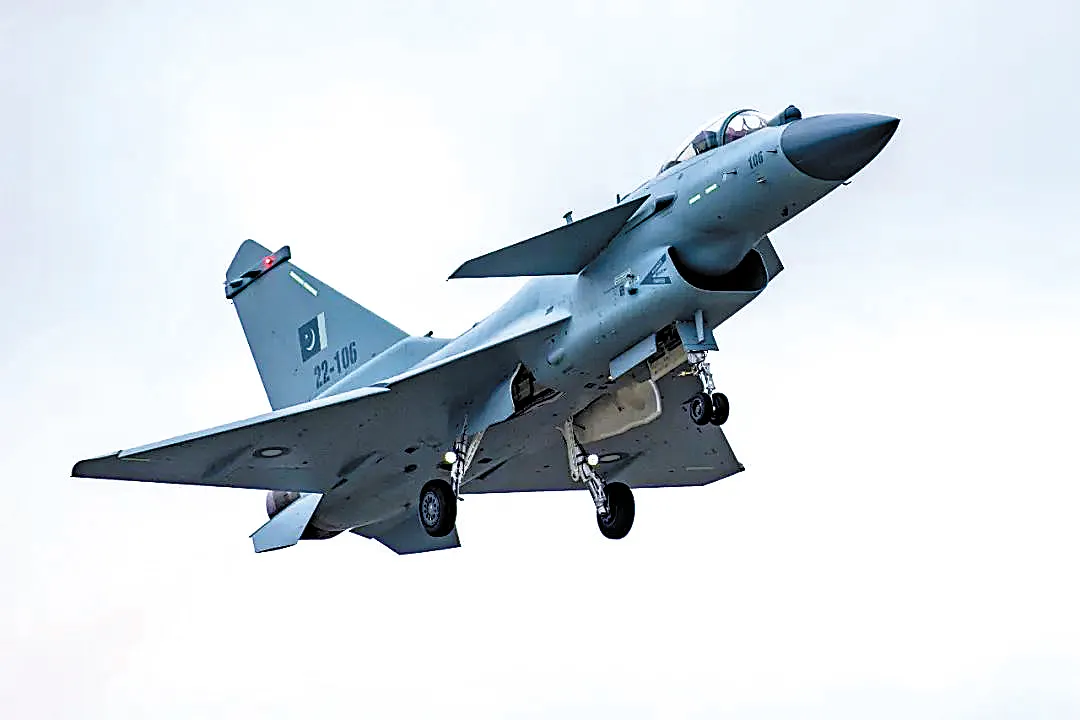
In the case of India vs. Pakistan, however, both sides were at parity – both in quality and quantity. The IAF fielded the Dassault Rafale, Su-30MKI and the MiG-29UPG that were matched in capability – and number – by the PAF’s J-10C, JF-17 Block-III and F-16 Block 52s. The IAF’s second tier of aircraft – the Mirage-2000s, the SEPECAT Jaguars and the Tejas Mk.1s (the Mk.1A has not yet entered service) was similarly matched by PAF Mirage-III/5s, as well as some older F-16 variants.
The combat that followed the first day of ‘dogfights’ (I use the term advisedly) was also peer-to-peer. Pakistan demonstrated an ability to target IAF bases – though they did not necessarily do too much damage – and the Indian Armed Forces demonstrated that they could break through Pakistan’s Integrated Air Defence System (IADS) with relative ease. In these air strikes, advanced – and in some cases, truly world class – systems were engaged both to conduct air defence (S-400, Akash, HQ-9, HQ-16) activities as well as to hit targets (BrahMos, SCALP-EG, Hammer, DRDO SAAW – it is not clear what Pakistan used). Aside from this, the conflict also saw ‘low-tech’ drone swarms, launched by both nations at each other.
The purpose of this article is to produce an analysis of the overall conduct of the 4 days of fighting, each side’s likely objective, the apparent performance of the systems involved and what lesson one might take away from this conflict. In articles that follow, we will look at how the first night of aerial combat unfolded by mapping out known crash sites, how the ground combat evolved, and the nature of the IAF and PAF strikes on military infrastructure on the 9-11th of May.
6th May – No Crossing the Border:
With the exception of the IAF airstrikes on Pakistan in 2019, it has adhered – very strictly – to an odd rule of engagement (ROE): no crossing the international border and entering Pakistan. In fact, as admitted by both the PAF and the IAF, neither sides’ combat aircraft ever crossed the international border. This rule is the result of Pakistan’s acquiring of nuclear weapons. Until 2019, when the IAF did cross into Pakistan with questionable efficacy, it was believed that a strike into Pakistan proper would contravene one of the nation’s “red lines” and bring the region one step closer to nuclear annihilation.
This ROE, rather, a version of it, seems to have been (either by itself or by the civilian government) imposed upon the IAF during the planning for “Operation Sindoor”. This is evidenced by the statement given to the press by the Indian MEA and MoD, in which they clarified that the Indian Armed Forces had only struck terrorist camps and headquarters and not any Pakistani military assets. This put the IAF in a very precarious position.
To put it short – the IAF had been given the daunting task of striking reasonably deep into extremely well protected and surveilled airspace, without first conducting any Suppression of Enemy Air Defence (SEAD) operations or without first targeting enemy fighters on Combat Air Patrol (CAP). In such an engagement, against a peer enemy with extremely capable platforms and weapons, losses are almost inevitable. While the IAF was able to deliver its strike package, it did lose some airframes to the PAF’s extremely capable PL-15E Beyond Visual Range Air-to-Air Missile (BVRAAM). This is among the first lessons the world learnt on the night of the 6/7th May – the J-10C and the Jf-17 Block-III armed with the PL-15E are serious threats in the BVR space.
7th to 9th May – Drone Warfare and SEAD:
Every night following the combat on the 6th, Indian and Pakistani air defence gunners light up the night sky as suicide drones and loitering munitions were flung into their respective air spaces by their opponent. On the 9th, Indian SAM systems got some target practice as well, with Pakistani CM400AKG cruise missiles and Fateh-II short-range ballistic missiles being fired into India. The target of both was the other’s air defence capabilities. Here, India had some considerable success, while Pakistan – relying largely on Turkish suicide drones – was unable to break through India’s IADS.
Most notable, during this period, was India’s successful strikes on a Pakistani air defence unit in Lahore and near the Pakistani General Headquarters in Rawalpindi. As confirmed by the PAF themselves, India used IAI Harop suicide drones to locate, target and disable Pakistani air defence units in Lahore. At least one HQ-9/16 site was hit and air defence guns damaged.
India too was hit, but the damage was often minor to none. Footage recorded by civilians shows that Pakistani drones did hit near cities (example), they did not hit their marks – likely to have been IAF bases. In a statement released by the IAF, they confirmed that drone defence was undertaken by a number of short-range SAMs (such as the QR-SAM), MANPADs and even snipers, but the majority of the work was done by the Bofors L/70 40mm AA gun, which was first developed in 1936 and – aside from electronic upgrades – remains virtually unchanged since.
Here, however, one should not be too quick to judge the efficacy of Pakistan’s Chinese-made SAMs. The HQ-9 is designed, specifically, to provide defence against modern fighter jets. Its large missiles would not be manoeuvrable enough to target tiny drones, even if the HQ-9’s radars could provide a solid lock (which is, itself, unlikely). The HQ-16 is a step above the HQ-9, and is designed to target things like supersonic cruise missiles, ballistic missiles and the best of NATO’s fighter jets.
The real test of Pakistan’s Chinese-made SAMs would come on the 10th of May.
10th May – Airfields Under Attack:
In the early hours of the 10th of May, the IAF finally did what it had been barred from doing on the 6th. According to satellite imagery released by the IAF themselves (see relevant article for details), they targeted 4 Pakistani air defence radars in Sukkur, Chunian, Arifwala and Pasrur. The radars at Sukkur and Chunian were destroyed completely while at Arifwala and Pasrur, the radar head seems to have suffered enough damage to blind the PAF. It is not known what weapon was used to do so.
Following that strike, the IAF and Indian Army launched a number of cruise missiles – the SCALP-EG and the BrahMos at targets across the country. The effectiveness and the accuracy of these strikes was such that they temporarily put the PAF out of the fight, as 11 airbases were targeted across the country. The defence analysit, Damien Symon, has analysed some of these strikes in great detail via publicly available satellite imagery:


While Indian media, as is typical, claimed that entire airbases were destroyed, the IAF seems to have been measured in its strikes. Air Marshal Bharti, the Director General of Air Operations, noted that the goal of the IAF was to strike Pakistan’s military infrastructure in such a way that it crippled – temporarily – their ability to wage war, without causing too many casualties.
Pakistan, too, attempted to conduct similar strikes on IAF bases. However, as demonstrated – once again – by Damien Symon, these were not successful.


Here, too, one must – before passing judgement on them – take into consideration that Pakistan’s HQ-9 and HQ-16 systems have a very limited coverage. This is because Pakistan has acquired them in very small numbers. While we do not have the full figures, it is believed that less than 1 full regiment worth of HQ-16s are in service, with barely 2 regiments of HQ-9s. Footage from May 7th-9th also showed some successful interceptions of Indian missiles by these two SAMs and it is also, therefore, likely that – on the 10th – they were depleted and unable to respond. Regardless, India’s successful strikes on Pakistani radars would have rendered them slightly blind and slow to respond.
What does it all mean?
The first “lesson” is a repeat of what Russia discovered all the way back in 2022. Air strikes against an opponent capable of putting up vast SAM and AAM coverage will result in not-insignificant losses to the attacking force. Furthermore, India’s losses were exacerbated by their insistence on not conducting any SEAD in an effort to maintain control of the escalation ladder. India’s switch to then directly target Pakistan’s air defence infrastructure shows that India is willing and able to target them with relative ease if they wished to. India’s new policy, as stated by the PM himself, of targeting the Pakistani military directly in response to any terrorist attacks is also further evidence to the fact that India does not want to take this risk (i.e. targeting terrorists without targeting Pakistani defences) again.
Following that, one must consider that almost all platforms used by either side performed very well, if not better than expected. Aside from Pakistani SRBMs and Turkish drones, which could not penetrate Indian IADS, all weapons used achieved exactly the outcome they should have. The Jf-17 and J-10 proved themselves to be serious players, where once their capabilities were doubted by the general public in online forums. The French SCALP-EG showed, once again, that it is capable of evading SAMs and hitting its targets with pin-point accuracy. The BrahMos’s combat debut displayed its much-tested accuracy, speed and efficacy against hardened enemy targets. India’s air defence platforms, too, proved their mettle in combat against saturated drone and missile attacks on multiple nights.
But then, there is the question of the Rafale and the Chinese SAMs.
One must not make the mistake of writing-off these systems simply because a Rafale was shot down or because the HQs could not stop the Indian attack. These failures must be viewed in the context in which they occurred. The Rafale was operating under an ROE that left it wide open to attack and did not allow it to fire back (at least, initially). Furthermore, since the Rafales likely had to be at a significant altitude in order to drop their Hammer guided bombs, they were therefore made that much easier to target the PAF. The Chinese HQs had to defend an immense airspace with limited numbers and likely depleted stores of ammunition. Indian drone attacks, against which Pakistan had no answer, also likely damaged them – further limiting their ability to respond to the IAF missile attack on the 10th.
While neither side has achieved, by any means, a strategic or decisive victory, they have both won some tactical ones. The shoot down of at least 1, maybe more, IAF aircraft in exchange for no confirmed PAF losses is – certainly – a mark in favour of the Pakistanis. However, all that transpired after the 6th is a mark in favour of India. Pakistan was unable to any serious damage to India following the initial combat and India was able to disable, temporarily if nothing else, multiple PAF bases.
Who won? Nobody. It wasn’t that kind of conflict. India succeeded in sending its message to Pakistan and Pakistan succeeded in sending a message to Pakistanis. This conflict is not over, though the guns may – for now – lie silent.
Leave a Reply