
Introduction:

On May 1st 1938, the British Indian Army would become among the first armies in the world to adopt into service the “tank”. It was on this day that the 14th Prince of Wales’s Own Scinde Horse, known in modern Indian service as 14th Horse (Scinde Horse), became the first Indian unit to dismount from their horses entirely. Instead, they would ride into battle inside the Vickers Light Tank – Indian Pattern (remember Vickers, they’ll be back!). This is not to say that India began to use tanks only in 1938 – Indian cavalry units had been supplied with the tank as early as 1931. In fact, they had already been used in combat in the 1936-39 Waziristan Campaign, in which the British Indian Army sought to put down Pashtun raiders in the North West Frontier Province. In the 91 years since tanks were first introduced in Indian service, the Indian Army and its Armoured Corps has adopted dozens of models of tanks.
Some of these models are legends – like the Centurion Mk.VII, M4 Sherman or the T-55. Others are well known, if nothing else, such as the AMX-13s or the Vijayanta Mk.1s. Some are infamous, like the Arjun while the currently serving T-72s and T-90s are hot topics of debate in online forums. But there are those that have been completely forgotten. From upgrades or modifications of platforms such as the T-55 to desecrations of platforms like the BMP-1, the history of India’s armoured and mechanised formations is littered with abandoned projects, promising prototypes and unremarkable service lives. In this article, we will take a look at some of them.
NOTE: Some of you may be excited to read more on the famed Indien Panzer but that project is not going to be covered for the simple reason that the Indien Panzer never left the drawing board.
Tank Number 1 – The DRDO Light Tank:

In 1976, the Indian Army published a General Staff Qualitative Requirement for the ‘Design and Development of a Light Tank based on the BMP-1’. In 1983, the MoD gave them the clearance to go ahead – however, by this time, the Indian Army had lost all interest in such a vehicle. The original GSQR called for the BMP-1 to be fitted with a new turret capable of housing the French CN 90 F3 (or F4) 90mm gun. In 1985, the Defence Research and Development Organisation produced the DRDO Light Tank. As seen below, the original version saw the BMP-1’s hull refitted with a French GIAT made TS 90 turret which mounted the 90mm gun.
By 1986, the Indian Army had declared that the GSQR for which the DRDO Light Tank was being developed was no longer being considered to be necessary. That is to say, the Army did not need a light tank anymore! This did not dissuade the DRDO who continued to work on the project well into the 90s. Though the Army was not interested in purchasing the tank, they did work with DRDO to improve the design. In 1992, this collaboration would lead to the creation of this version. The TS 90 turret was redesigned to fit a 105mm gun. I am unsure which 105mm, as it bears no resemblance to the L7 already in Indian service. I am also unsure if this is in fact a photo of the 105mm version. Only 3 photos of this tank exist in the public domain!

Between 1983 and 1996, which is when the project was cancelled, somewhere between 2-3 prototypes were made. DRDO expended over twice the allocated budget for the project and the result was a tank that could not function. The BMP-1’s hull had not been redesigned for the extra weight that a new turret, new gun and a lot more ammunition would bring. As such, performance was much worse than expected. it was slow, underpowered and could not, therefore, perform the one task it was needed to – provide firepower to infantry units in the high Himalayas. Unsurprisingly, the prototype remained just that and the type was never introduced to service.
Tank Number 2 – The T-55 “Gulmohar”:

T-55s, specifically T-55s, would enter Indian service in the late 60s – specifically being delivered between 1968 and summer of 1971. They would serve with distinction in that very same year, with Indian T-55s rolling down the streets of Dacca – victorious in the 1971 Indo-Pak War. When they were first introduced in the late 60s, they were among the best tanks in the world – however, by the end of that decade, the T-55s were in dire need of modernisation. As the 80s rolled around, the T-55s were in the minority in the Indian Armoured Corps – which was largely outfitted with Centurions and the (sort of) home-grown Vijayanta. There are multiple numbers, but roughly 750-1000 T-55s were in service – with nearly 2000 Vijayantas and a similar number of Centurions in service. The T-55s were inferior to the Centurions and the Vijayantas in one key aspect – firepower.
The T-55s, and many other Soviet tanks of the era, mounted the D-10T 100mm gun. While this gun was no slouch – its 3BM8 APDS round was excellent for the time – it was quickly outclassed. Certainly, Soviet guns themselves outclassed it – like the 115mm U-5TS gun mounted on the T-62 – but it was most outperformed by the British L7A1 105mm gun, the same gun employed by the Centurions and the Vijayantas. A key distinction between the D-10T and the L7A1 is that the D-10T’s best rounds (as available to India!) were Armour Piercing Discarding Sabot (APDS) rounds (i.e. the 3BM8), whereas by the 80s the L7A1 was firing Armour Piercing Fin Stabilised Discarding Sabot rounds (APFSDS), such as the British H6/62 or – more relevant here – the Indian 105mm FSAPDS (imaginatively named, I know).[1]
As such, the order was given in 1984 to up-gun hundreds of T-55s to the T-55 Gulmohar standard. This project, named Project Gulmohar, was carried out by the experienced mechanics and engineers of 512 Army Base Workshop – the Indian Army’s oldest operating workshop. By the mid-90s, 512 ABW had overhauled 800 T-55s to the Gulmohar standard. By 2001, when the project was cancelled, they had overhauled over 1000 – of which only 750 were in active service.

Unlike the previous tank – or the one that will come after – the T-55 Gulmohar did, in fact, see some action, and continues to do so. While there were no major wars involving AFVs fought in this period, the T-55 Gulmohar, along with the Centurion and the Vijayanta, were regularly deployed to the Line of Control with Pakistan. Here, they provided fire support to the infantry and also occasionally engaged Pakistani Type-59 MBTs. They would be withdrawn from service by 2008, with that withdrawal starting in 2001. Some T-55s (and Centurions) remain in service today along the LoC, acting as mobile 105mm howitzers.
Tank Number 3 – The M-46 “Catapult”

No! This is not to be confused with that other famous M46 tank – the Patton. In fact, the M-46 Catapult was not a tank at all. As you can see from the image, the Catapult was a self-propelled artillery gun (SPG). Like the other two tanks I have covered above, the Catapult too was a product of the Indian Army’s modernisation efforts of the 80s. Noting that the Regiment of Artillery (which is actually a Corps) lacked any credible SPGs, it was decided to remedy that by refitting a tank hull with the newly introduced Soviet-made M-46 130mm artillery guns.
For this, the Vijayanta hull was chosen – likely because it was readily available and made domestically. The result was a perfectly serviceable SPG that had a completely unremarkable service life. In spite of the facts that artillery was used in combat nearly every day at the LoC (up until February 2021) and that nearly 200 M-46 Catapults were made, they never saw combat. Though they were often deployed, for instance during the 2001-02 India-Pakistan Conflict, the 2008 mobilisation following 26/11 or the 2020-2024 Sino-Indian Clashes, they never once fired a round in anger. After a quiet service life spanning 4 decades, the M-46 Catapults were withdrawn from service in 2021.
Tank Number 4 – The Vijayanta Mk.2 “Bison”

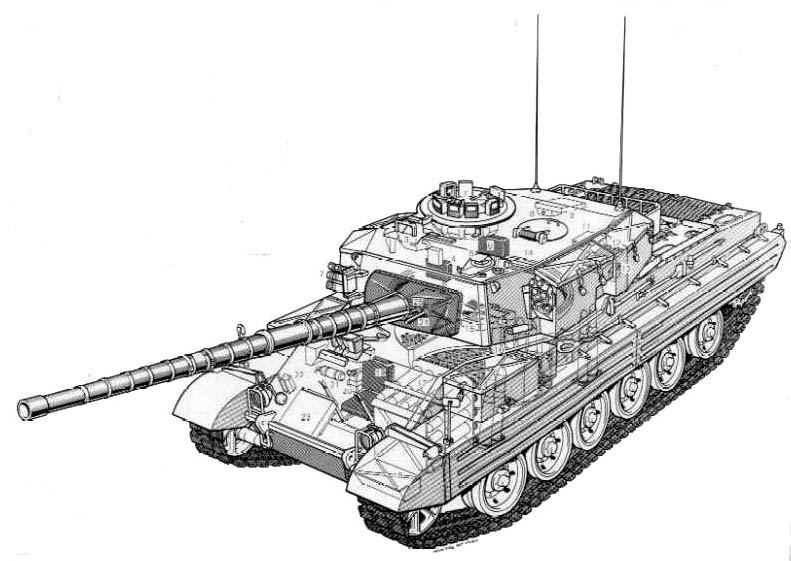
The Vijayanta was India’s first attempt at creating a homegrown MBT. Unlike its second attempt, the Arjun MBT, the Vijayanta was an extremely successful design – which was thanks in no small part to the fact that it was a further development of a British design, the Vickers MBT. First brought into service in 1963 as the Vickers MBT, it was quickly Indianised. In 1965, Heavy Vehicles Factory Avadi began production of the type and it was rechristened the Vijayanta. Between its introduction in 1963 and its total retirement in 2008, up to 2,100 oft the tanks were built in 4 main variants – the bog standard Mk.1 (which was indistinguishable to the Vickers Mk.1), the Mk.1A (which was fitted with new sights and new fire control systems), the Mk.1B (even newer sights!) and the M1.C (likely fitted with the Marconi SFCS 600 fire control system).
These tanks were the back-bone of the army well into the 80s. As with all other tanks so far mentioned, the Army realised that the Vijayanta Mk.1As (the single most numerous variant in service) needed to be overhauled to remain competitive. Originally, the plan was to replace them with the Arjun MBT – but the less said about that the better. When that couldn’t pan out, the Army began to consider an upgrade program – the Mk.2 “Bison”. NOTE: often, the “Bison” upgrade is considered to be separate to the Mk.2, but they are the same.
The Bison would see the Vijayanta fitted with a 780 horsepower V-84 engine out of a T-72, the addition of the SUV-T55A fire control system, the integration of the BEL AL 4421 sights found on the Mk.1B for both commander and gunner, the addition of a land navigation system (something akin to GPS) and – most importantly – the application of Kanchan. Kanchan was the new composite armour (an armour type that is often erroneously referred to as Chobham armour – Chobham is a type of composite armour) that was developed for the Arjun.[2] The application of that armour is the most obvious visual marker – as can be seen from the image.

Only a handful were ever converted to the “Bison” standard and none were ever introduced to service as the Indian Army had taken the decision to replace all its tanks with the T-72M1.
Tank Number 5 – Vickers Light Tank – Indian Pattern

The story of the Indian Armoured Corps began with this remarkably little tankette produced, once again, by the Vickers Armstrong Company. The Vickers Light Tank was the mainstay of the Indian Armoured Corps (which didn’t actually exist then) from 1931 all the way to 1938. Unlike the other tanks of the time, the Vickers Light Tank did not mount a cannon – not even a little 20mm cannon. Instead, it was fitted with the .50 Vickers machine gun. This was because the Indian tanks, at the time, were required to fight rifle-armed Pashtun tribesmen – there was simply no need for cannon armed tanks.

The Vickers Light Tank – Indian Pattern served in two specific marks. The first one to enter service was the Mk.IIb (image no.1) and the last one to enter service was the Mk.VIb (image no.2). While they may look unimpressive, they would lay the foundation of a successful armoured corps that would go on to fight in some of the largest tank battles in modern history.
Also, they’re incredibly cute.
[1] As a note, comparing penetration values vs RHA is always a pain but it is important to note that the 3BM8 was severely out performed by the 105mm FSAPDS. ALSO, yes the 3UBM11 APFSDS was likely in limited service with Soviet T-55s by the end of the 70s, but these rounds never reached Indian hands – not that it mattered, because they were outperformed by 105mm APFSDS, even Indian developed.
[2] As is the case now and was then, the components that were developed for the Arjun were – in fact – excellent. In 2025, this can be understood by the introduction of the T-90 Bhishma Mk.III – an upgrade to the Indian T-90 fleet that is chock-full of components developed for the Arjun.
Leave a Reply