
For a comprehensive breakdown of the objectives, ships, and situation that defined the requirements and plans for Operations Trident and Python, please read the previous article in this series which can be found here. For the previous article in the series, click here.
Other Articles on 1971:
- To Break a State in Two: The Birth of Bangladesh and the Sundering of Pakistan
- India’s November Campaign Part 1: The First Battle of Hilli, 22nd-24th November, 1971
- India’s November Campaign Part 2: The Battle of Garibpur, 20th-21st November, 1971
- India Invades “Bangla Desh”: How the Pakistani and Indian Strategies Matched up in the War of 1971
- The Destruction of the Pakistani 93rd Infantry Brigade, the Tangail Paradrop and the India-Pakistan War of 1971
Introduction:
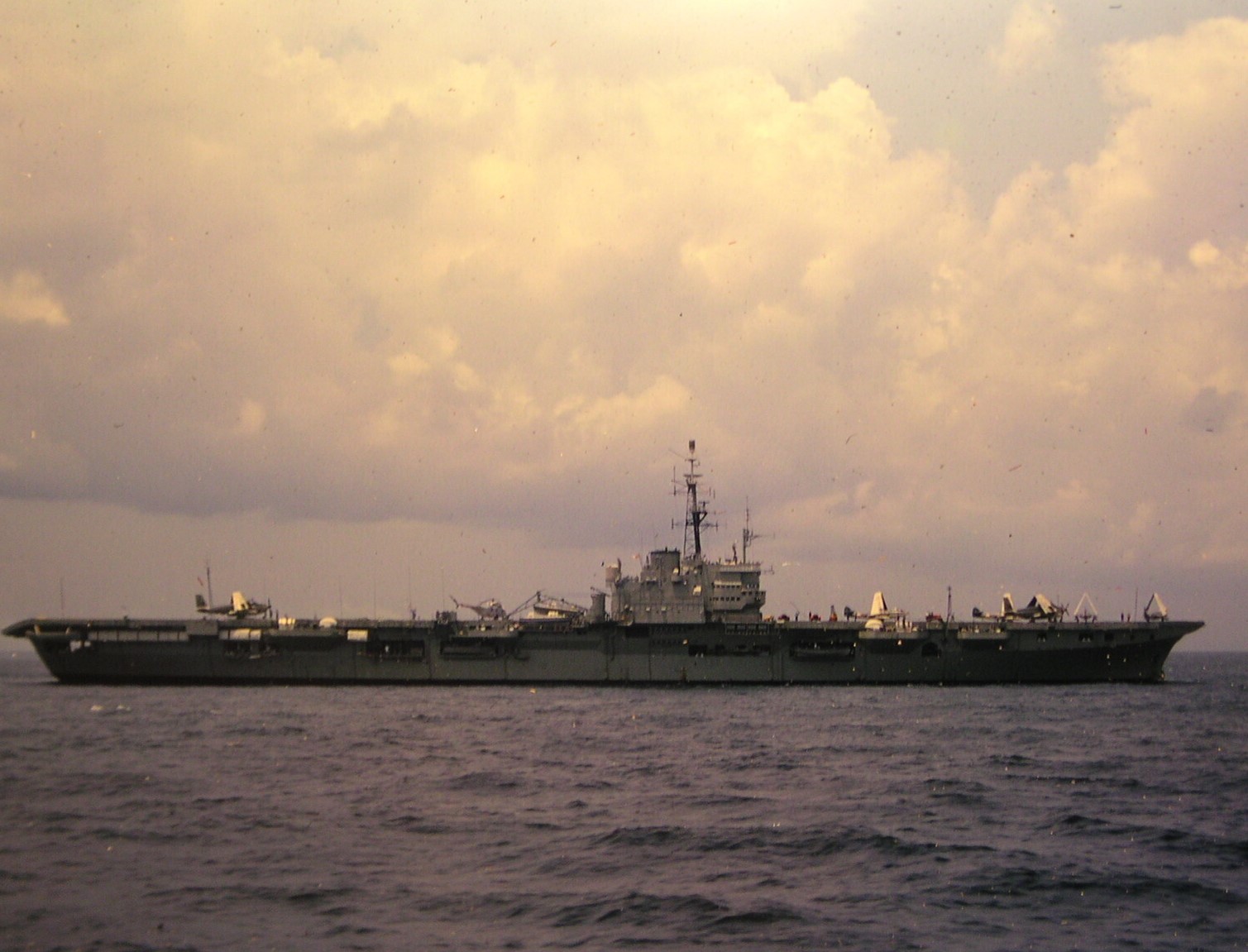
The naval operations in the Bay of Bengal during the 1971 India-Pakistan War were markedly different to those in the Arabian Sea. There were no decisive battles like Operations Trident or Python. There was no great threat to Indian maritime dominance or a large force of Pakistani warships. Instead, the action here would be characterised by the ceaseless operations carried out by the pilots and crew of the INS Vikrant, the Indian Navy’s most famous warship.
To a lesser extent – in terms of the glamour shared by the participants in the war – the Eastern Fleet also undertook a large number of, what they called, “Naval Commando Operations”. This “Naval Commando” unit was called “Force Alpha” and though much of what they did in the war remains secret even in 2023, this article will still dive into some depth about these fearless Bengali and India commandos who were responsible for clandestine raids all along the coast of East Pakistan.
In this, the last instalment in our “A Tale of Two Navies” series, we will explore in great detail the ships and the actions that gave the Indian Armed Forces their greatest victory yet; the Surrender of Dhaka.
INS Vikrant and Her Flying Machines:
The story of Vikrant in the war begins in the summer of 1971; a full 6 months before any of her planes released their bombs over enemy territory. In March, INS Vikrant was in dire straits. Her boilers (the bits of her engine that heated up steam to power the propellers that propelled the ships) had broken down and her steam catapult (used to launch aircraft with their full load of ammunition and fuel) had been put out of commission. This was nothing unusual but it was a very bad time for her to have broken down. As she sat in dry dock for repair, it was considered very unlikely that she’d be fighting fit in time for the war everyone thought was coming.
From the moment she entered service in 1961, the Indian Armed Forces had fought 3 wars and for 2 of them (1962 Indo-China and 1965 Indo-Pak) she had been laid up for overhaul or refit. She had only been able to serve in the 1961 Indian Annexation of Portuguese Goa and even then, her role was minor. Given that she had been a no-show for very important operations and spent the whole of two very important wars in a dry dock Bombay being repaired had put doubts in the mind of the Indian Admiralty regarding the importance of Vikrant and carrier aviation in general in the Indian Armed Forces.
As Rear Admiral S. Ramsagar recounts, had it not been for Indira Gandhi listening to her Chiefs of Staff, the Vikrant would likely never have seen combat. The Chiefs of Staff (General Manekshaw, Admiral Nanda and Air Chief Marshal Lal) told her in no uncertain terms, when she convened a meeting to discuss if they could invade East Pakistan in the summer, that if they invaded immediately, they would lose the war. They needed time to prepare; Manekshaw needed time to get his new tanks (T-55s and PT-76s) to his armoured regiments and time to drill Eastern Command in jungle warfare, Lal needed time to reactivate his forward airfields, prepare strike missions and evaluate targets, and – as it pertains to this article – Admiral Nanda needed time to repair Vikrant and train his crews for striking Karachi.
And this time to prepare would pay-off.
By October, Engineers led by Commander Chakravarthy had gotten 2 of her 4 boilers working and she finally put to sea to carry out trials of her aircraft; the British-built Hawker Sea Hawks flown by Indian Naval Air Squadron (INAS) 300 and the French-built submarine hunters Bréguet BR.1050 Alizé flown by INAS 310. However, despite having put to sea, her troubles were far from over. She was limited to only 14 knots (25km/h or 16mph) and her catapult was still broken. This meant that she could not get up to the speed required to launch her aircraft with a full complement of weaponry and fuel (20 knots speed along with a working catapult was required to move enough air over the aircrafts’ wings) and her pilots therefore had to undertake flight operations with no extra weaponry and barely any fuel.


By November, however, her Engineers had been working tirelessly and had gotten her remaining boilers working. With that done, the Vikrant could once again safely hit 20-22 knots and would hit her full speed (25 knots) by the time the war began. Her catapult too had been made operational and the Sea Hawks and Alizés could finally operate with their full complement of fuel and weaponry.
The only threat to Vikrant, PNS Ghazi had been neutralised very early (check the first article in this series to understand how) and by the time the war began, there was nothing in the Bay of Bengal that could realistically hinder Vikrant’s operations. When, on December 3rd, war was declared, her aircraft would embark on strike missions almost immediately.
She had 18 Sea Hawks and 5 Alizés embarked. These 23 aircraft would carry out, between the 3rd and 16th of December, 291 sorties; an average of 22 sorties a day (for comparison, the USS Enterprise with her 60+ aircraft did around 50 sorties a day during the First Gulf War). Their objective was to enforce the naval blockade of East Pakistan through the air. They would strike port facilities, specifically in Chittagong and Cox’s Bazar, bomb and strafe the few vessels the of the Pakistani Navy that had been deployed there and patrol the Bay of Bengal to locate any Pakistani merchant vessels that had slipped through the Indian Navy’s net.

They would also support the Indian Army’s offensive. Though the Indian Army relied mostly on the IAF for its close air support (CAS), INAS 300’s Sea Hawks carried out 23 CAS missions in support of the Army; attacking Pakistani tanks, fortifications and artillery. Within the first 2 days of the war, the Indian Air Force had wiped out the Pakistan Air Force in East Pakistan; having shot down multiple F-86 Sabres and grounded the rest. The majority of the Pakistani AA was located around Dhaka to protect the city from the IAF’s constant bombing runs. The Indian naval aircraft really had no opposition and their bombing runs went unimpeded. None were lost to enemy fire or to accidents.
Over the course of the war, INAS 300 and 310 dropped 151 bombs, fired 694 rockets and discharged 22 depth charges. They sunk 14 small merchant vessels and 6 gunboats and assisted in the interdiction and arrest of 12 large Pakistani merchant ships. They destroyed the airfields at Chittagong and Cox’s Bazar, destroyed Pakistani Eastern Naval Command’s HQ, and completely put out of commission the harbours at Chittagong and Cox’s Bazar. Without these aircraft, the Indian Navy would have had a hard time enforcing their blockade of East Pakistan. And, without the blockade, it is very likely that the Pakistan Army could have sent a further 2 infantry divisions (as was the plan!) into East Pakistan, causing the war to drag on for perhaps a month longer – if not more.

Force Alpha:
The story of Force Alpha is far less glamorous. Force Alpha was made up of 1 purpose-built Indian Navy gunboat (INS Panvel), a barge of the Border Security Force (Chitraganda) and 2 civilian boats refitted with HMGs and 40mm cannons (Padma and Palash). Aboard them were around 60 men of the Indian Navy and a few more of the Mukti Bahini that had been specially trained for riverine warfare – for you see, the point of Force Alpha was to sail the many rivers that mark Bangladesh with the specific intention of destroying Pakistani gunboats, inland harbours and attacking any target of opportunity they came across.
Force Alpha’s missions lasted from the 8th of December to the 16th. They would see some minor successes in their early days, but their greatest success would come on the 10th of December, when they burned to the ground the harbour facilities at Khulna Harbour. Force Alpha would very often coordinate their strikes with the IAF, who would soften Pakistani defences before Force Alpha’s ships and men arrived. On one occasion, for example, they destroyed the majority of Mongla Harbour and left only the most minor mopping up to Force Alpha.
But, there was to be some tragedy. While Force Alpha suffered almost no casualties to enemy fire, in the early hours of December 10th, a miscommunication (rather, a communication delay) between Indian Navy HQ and Indian Air Force HQ would result in IAF Folland Gnat fighters bombing Padma just outside Khulna Harbour. Padma was set instantly ablaze but the majority of her crew managed to abandon ship in time and were picked up by the other ships of Force Alpha. Palash was also set on fire, but her crew managed to contain the fire and she was made operational for the strike on Khulna quite quickly.
Conclusions:
The Indian Naval Operations in the Eastern Theatre were crucial to the success of the invasion. Without their incessant efforts, the harbours that dotted the East Pakistani coast would have remained operational and could likely have aided either in the reinforcement of the garrison or the evacuation of the garrison. More than likely, they would have facilitated both.
Sources:
Brig. Siddique Salik, Witness to Surrender (Oxford University Press; 1979)
History Division, MoD, Official History of the 1971 Indo-Pak War (Chapters 11 and 15)
Commodore Ranjit Rai, A Nation and its Navy at War (Frontier India; 2015)
Hasan Zaheer, The Separation of East Paksitan (OUP Pakistan; 1996)
Maj. Gen. Fazal Khan, “The Pakistan Navy at War”, in Commodore Ranjit Rai (ed.), A Nation and its Navy at War (Frontier India; 2015)
Maj. Gen. Ian Cardozo, “Maritime Operations”, in In Quest of Freedom: The War of 1971 (CLAWS; 2016)
S. B. Kesnur, M. Doraibabu, A. Kale “Operational Aspects of the 1971 War in the Maritime Domain”, in S. Chinoy (ed.), B. Bakshi (ed.), V. Chadha (ed.), 1971 India-Pakistan War: 50 Years Later (Pentagon Press; 2022)
James Goldrick, The Development of the Navies of India, Pakistan, Sri Lanka and Bangladesh; 1945-1996 (Papers in Australian Maritime Affairs; 1997)
Leave a Reply