
Articles Previously Written that Inform the Content in this Article:
- The Anglo-Mughal War
- The Mughal Way of War
- The Military Revolution in India, Part 1 (1525 to 1700)
- The Military Revolution in India, Part 2 (1700-1800)
The information imparted in these articles will provide great context and specific details that I will not mention in this article. It is not critical to read these articles before you read this one, however!
Introduction
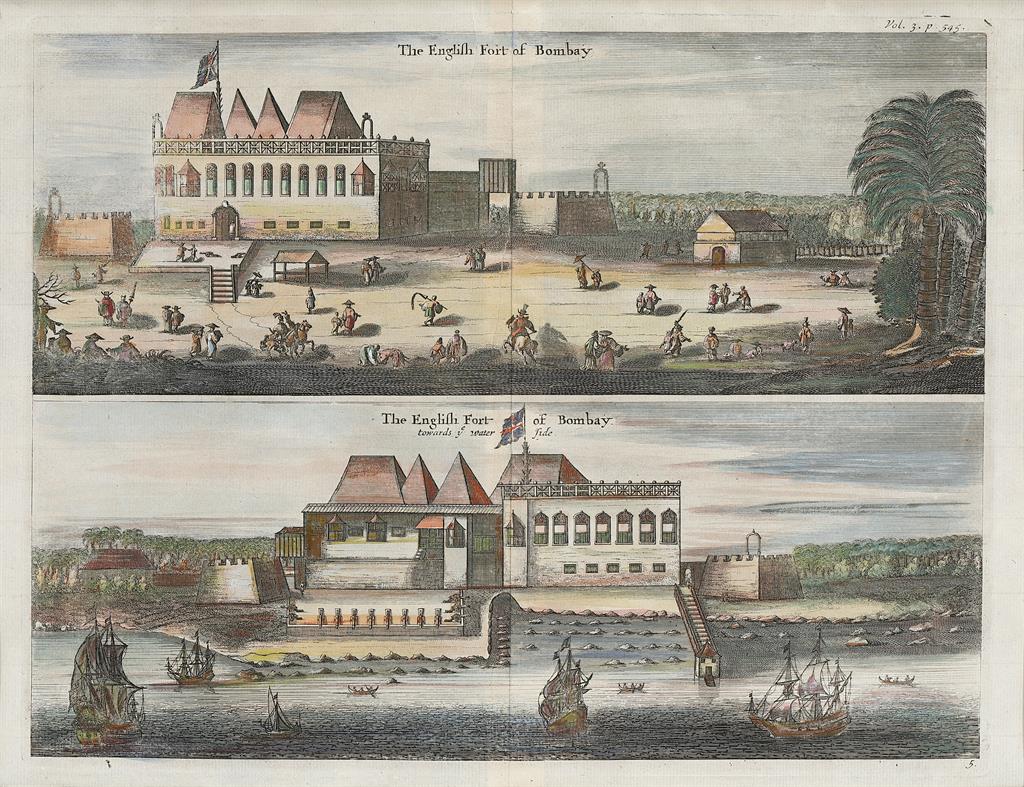
I have spoken at length about the Mughal siege of English Bombay (1689-1690) in a previous article. However, since that article was written, I have had the luxury of being able to conduct detailed research. Most importantly, I’ve been afforded the privilege of being granted nearly unlimited access to the India Office Records held at the British Library. This has given me the ability to uncover evidence that has been buried by centuries of archival material and (re)discover hitherto forgotten knowledge regarding the Siege.
First, a short background on the 1686-1690 Anglo-Mughal War.
The War was begun far East of Bombay – in the swamps of Bengal. Given that Bengal was the richest province in the world at the time, the English East India Company – for a variety of reasons too complicated to go into now – decided to launch a military campaign with the goal of securing lower taxes and better trade agreements with the Mughal Nawab of Bengal. This campaign was launched in 1686 when 400 English troops raided the town of Hooghly. The Mughal Army was 900,000 strong. By 1687, the English had been kicked out of Bengal. This, though it seemed like failure, was in fact a brilliant stroke of diplomacy by the “Generall of all English Forces in India, by Land or Sea” – Sir John Child. The Mughal Emperor, Aurungzeb, was ready to expel the British in their entirety from India as punishment for their misadventure in Bengal. However, Child was able to negotiate with the Emperor and it was decided that only the Bengal Factories [Factories at the time meant trade and diplomacy outposts, not factories in the modern sense] would be disbanded and the English expelled from there.
This did not end the troubles faced by the English, however. With the cessation of fighting in Bengal and along the Eastern Coast in 1687, a spat now developed between the English in their Factory in Surat and the Mughal Governor of Surat, Mukhtar Khan. Mukhtar Khan – for reasons unknown – began to periodically conduct Tax and Customs raids on the Factory at Surat in 1688. In an inventory created in 1691, the English estimated that throughout 1688, Mukhtar Khan stole over items and currency totalling over 300,000 Mughal “rupiyas” (worth over 30 million USD in 2024, based on some rough calculations). By late 1688 (the exact date is unclear, though some time in November), Mukhtar Khan seized the Factory at Surat, imprisoned (though he did not harm in any way) all Englishmen in Surat and seized all goods – including 22 gold ingots and 60,000 “rupiyas” in coins.

When negotiations – with the Mughal Emperor and with Mukhtar Khan – broke down completely in December of 1688, with Child point blank refusing to agree to any terms the Mughals put forward that involved the Company being fined, Sir John Child gave a fateful order. On January 20th, 1689, 2 East India Company “Men-of-War”, the Emerald Frigot and Worcester ambushed a Mughal convoy sailing from Surat to the Deccan. The English were infinitely better sailors than the Mughals and had much, much better ships and crew. As a result, the Emerald Frigot and Worcester managed to capture 36 large freight ships, after destroying or driving away their escort. But what the Mughal Navy lacked in capability, the Mughal Army more than made up for.
On the 15th of February, an army 14-20,000 strong (estimates vary and Mughal sources have not yet been translated or researched) led by Admiral (Sidi) Yakut Khan besieged Bombay. By May of 1690, when the siege was ended and a peace concluded, over 90% of the city’s population and 95% of its Garrison had been killed (according to research conducted by Margaret Hunt and Philip Stern). The terms of the peace humiliated the Company. They had to pay a fine of 150,000 “rupiyas”, agree to disband all armed units for a year, Child had to be expelled (he’d died in February of 1690 but this was not known to the Mughals), they had to pay a 4% tax on all goods (the previous was 2%) and had to follow Aurungzeb’s orders. In return, the Surat Factory would be returned to them and all imprisoned Englishmen released and they would be allowed to reoccupy their Bengal Factories. The English agreed to these terms without negotiation.
In 1689, however, Child had tried – in the middle of being beaten by the Mughals – to negotiate a much more lenient peace for the EIC. Transcribed below are the terms he proposed. I’ve also included some other documents that you, the reader, might find interesting! Note: I have, in most places, edited the spelling to how the words would be spelt today. I have not edited the grammar, which may seem very archaic to a modern reader.
Document 1: Ships Dispatched by the EIC and Placed Under Child’s Command
Source: LB8 IOR/E/3/91, East India Company in London to President and Council at Surat [I.E John Child], 31st March, 1686 fol. 98.
| Ship’s Under John Child’s Command | ||||
| Ship | Captain | Tonnage | Crew | No. of Guns |
| Ship’s in Bombay and Western India | ||||
| Charles the Second | Captain Jonathan Andrewes | 775 | 154 | 60 |
| Madonna | Captain William Wildy | 775 | 154 | 60 |
| Worcester | Captain Edward Keling | 220 | 44 | 20 |
| Nathaniel | Captain John Mason | 550 | 109 | 50 |
| Emerald | Captain Charles Hayward | – | – | – |
| Ruby Frigot | Captain Giles Hill | 80 | 25 | 16 |
| Baudon | – | – | – | – |
| Roso | Captain Thomas Lucao | 120 | – | – |
| Tonqueen Merchant | Captain Robert Knox | 160 | 30 | 14 |
| Ships’ in Bengal and South India | ||||
| Beaufort | Captain John Nicholson | 775 | 154 | 60 |
| Rochester | Captain John Brownwell | 775 | 154 | 60 |
| Royal James | Captain John Wotwang | 650 | 129 | 50 |
| Pryaman | Captain Jonathan Unkettle | 150 | 30 | 20 |
| Rainbow | Captain Benjamin Boole | 250 | 50 | 24 |
| Herbert | Captain Henry Uelall | 750 | 150 | 46 |
| Loyal Captaine | Captain Francis Eletrod | 150 | 27 | 20 |
| Cortana | Captain Anthony Waltdon | 140 | 27 | 26 |
| Rebecca | Captain Thomas Batton | 170 | 33 | 20 |
| Saphire Frigot | Captain Stephen Bradley | 80 | 25 | 16 |
| Dyamond | Captain Thomas Woodcock | 80 | 25 | 16 |
| Pearl | Captain James Perryman | 80 | 25 | 16 |

Document 2: Petition of Sir John Child to Emperor Aurungzeb, late 1688
Source: IOR/E/3/47/2, fol. 224
To Aurungzeb the Great Mughal,
From Bombay Castle
The Petition of the least of your servants Sr. John Child General of the English Nation like a grain of sand, and with the greatest regard to your Majesty’s person, amber-like in fairness, Lord of beneficence and-liberality, Solomon like throne, Epitome of Priest-Hood, Sikanderbeg [Alexander] like wisdom, Heavenly judgement, Potentate of the World, Centre of Serenity, Emperor Of the World and of the Age, object of all sublime things, the Divine Shadow of the Holy Prophet Mohammad, Aurungzeb whose person and kingdom the Divine Powers long prosper and Continue that his righteousness and justice may spread over the whole world and everlastingly continue for the benefit of its Inhabitants. Represented after due recommendation of servitude and vassalage with humility and lowliness of mind likening the floor of all servile offices with lips of respect and obsequiousness and with a head bowed down to your Fame and Greatness, know that-
I humbly addressed my (letter) to your Majesties by the way of Mukhtar Khan Governor of Surat more than a year ago and then gave in a particular account of the great Grievances my nation lay under was in hopes long abfore this to have had redress from your Majesties Justice to all but Mukhtar Khan as he upset everybody so hath deceived and abused me bare & did much with him, but lately his covetousness and naughtiness has Exceeded humane patience and I well know much contrary to your Majesties Royall Will and Pleasure. Having contrary to his cool imprisoned my people and seized a great estate in money and goods and having Endeavoured always under the Sun for peace to no purpose as is well
[NEXT PAGE]
Well known to many. Thousands at Surat and other places places I have now no way in appearance but to fly immediately to your Majesties whose wisdom and justice exceeds your greatness being placed by the almighty’s providence to govern a great part of the world. I have sent my grievances in a paper apart and humbly leave all to your Majesties pleasure not desiring the harm of any, my only hope is I may be righted where wronged and enjoy for the future your Majesties gracious firman and that my nation may enjoy the privileges they have had for many years in all parts of Your Dominions and not be imposed on and abused by any hereafter and the peace may be lasting that your Majesties would be pleased to order whom you shall think fit about your person to receive any future complaints from any of my nation and see they be righted, justable to your Majesties great Justice that makes you as glorious as you are Great in the World. I have this opportunity given by Mahmed Raizah God Preserve Your Majesty.
[Continued]
Mukhtar Khan pretending to make peace I went hence To Swally [modern Suvali], delivered up to him up to him 5 ships and 20 vessels laden & instead of seeing I had justice clapped a guard on my Factory imprisoned my Englishmen and other servants for some days and having done me great mischeifs by that & forced away from my people 140,000 rupees then set all at Liberty & pretended to make peace again.
From the severall merchants & owners of the ships I delivered up to his order he forced 10% for his own self on the value of their goods.
The season of the year bring harr [I.E monsoon] expended & the weather would not permit my longer lying at Surat I came away hither with Mukhtar Khan’s leave who advised me to keep all the Mocha ships & goods till a Phirmand [Firman] came from your Majestie and my bussiness was done.
This monsoon he sent for me again advising me he had a Phirmand for my nation and he would see my business done according to right & to my full satisfaction I on this went up and stayed at Swally near 4 months at loss instead of making peace as he promised as a sudden he seized and imprisoned all My people at Surat & a great estate was trusted In his hands on his Cole & then sent me word that there Should be no peace without I would give him 5 lacks Of rupees. That in all places of thy King’s Dominions we enjoy our privileges and not by any be imposed on in the least.
Document 3: Heads of a Firman to be Procured from the Great Mughal Aurungzeb, sent on December 6th 1689
Source: IOR/E/3/48/1, fol. 77
Note: The original document contains a long list of demands supported by arguments in favour of them explaining why they should be granted by Aurungzeb. Transcribed here are only the demands.
Heads of a Phirmand to be procured from the Great Mogull Orung Zeb, drawn out by the Generall & Council of Bombay, December the 4th, 1689
1st – That we have Free Trade in all the Great Mughal’s Dominions and not be forced or imposed upon by any Governors and or Officers
…
2nd – Our Custom [I.E Custom’s Tax] at Surat and all ports on this side of India to be but 2% for goods on the true value of the goods not to be overrated by the Governor or Customs [officers]
…
3rd – That all English be under our order and government and that the Governor at no time upon any pretence what-ever protect them from us but deliver them [I.E all Englishmen imprisoned to be released from Mughal imprisonment]
…
4th – That no Custom be paid for any goods that may require us to land [at Mughal controlled ports] for convenience’s sake, being such goods as we bring to the King’s Ports not for sale but to sail to England
…
5th – That for all sorts of Provisions [I.E goods brought into India for use by the EIC’s Factors and that are not for sale] … to be cut free [of Custom’s Tax] both at import and export and that we be not hindered at any time in shipping of Provisions
…
6th – That whatever goods or moneys may be robbed from any of our People in the King’s Dominions that satisfaction be made by that Government in whose indiscretion we were robbed
…
7th – That we have a place assigned us in the Mint Houses at the several places where we may be that the Governor nor any Officers of the King’s may have any Command over it
…
8th – That we have a warehouse allowed to us at the waterside near the Custom’s House into which we may immediately load our goods for the greater security of them
…
9th – That the several goods which we provided at the several inland places in the King’s Dominions be not stopped at the places they set out at or any other places under any pretences but permitted freely to pass down to such ports as we shall order
…
10th – That our several boats and vessels that come up to the Custom’s House with our goods be immediately unladed & cleared out of hand.
…
11th – That all people that are [indebted to us] the Government of the place [where the indebted people live] force them out of hand to pay us or allow the debt out of the allotted Custom [I.E cancel Custom’s Tax equal to the amount of debt unpaid]
…
12th – That what horses we bring to his Majesty’s ports may freely pass to our stables free of all duties
…
13th – That no Governor or Officer send to our warehouses or brokersfor goods to our great trouble and loss [I.E seizure of the EIC’s goods by Mughal officials to be disallowed]
…
14th – That a convenient bunder [Persian/Hindi word “Bandar” meaning port/dock/jetty] be allowed us at the several ports of the King’s Dominions for our ships & vessels to go and repair at
…
15th – LARGELY ILLEGIBLE
…
16th – A long and convoluted paragraph where Child demands that the privileges enjoyed by the Company and the privileges asked for here be also granted in all territory that the Mughal Empire may conquer in the future
…
17th – That we enjoy the same privilegesin all the Towns and Places of the King’s Dominions of the Bay of Bengal as formerly [I.E the same rights as before the EIC was expelled in 1687]
…
18th – That no Governor or Officer in any port of the King’s Dominions give any hindrance to any Merchant or others [in this case Indian merchants] but permit them freely to trade with us
…
19th – [In case of the break out of sickness or plague in an English Factory] then the Governor of the place make an exact account … of [all personal effects of any deceased] & secure them to be safely delivered up to the English that may come to demand them
…
… 20th – That if at any time a difference should fall out between the English and the Mughal’s Governor or people in any port or town of his Dominions that shall not cause a difference between the King [I.E Mughal Emperor] & [the English nation] in all [I.E any] parts of his Dominions
Leave a Reply