
Introduction:
As, in the final hours of December 16th, 1971, the 3rd Indo-Pakistani War came to an abrupt and sudden end with the surrender of the Pakistani Army, Air Force and Navy Eastern Commands, the Indian Navy had emerged as the undisputed ruler of the Indian Ocean. In the 13-days of the war, the Indian Navy had sunk 2 Pakistani destroyers, 1 minesweeper, 4 patrol boats, 12 gun-boats, 18 merchant vessels (MVs), had destroyed 50% of the Pakistan Armed Forces’ fuel reserves, wrecked the port facilities at Chittagong and put Karachi Harbour out of commission. Furthermore, the Pakistani Navy lost a submarine (PNS Ghazi) under mysterious circumstances and a frigate (PNS Zulfiqar) sunk by Pakistan Air Force aircraft, who mistook her for an Indian Navy vessel. In return, the Indian Navy lost 1 frigate (INS Khukri) to the Pakistani Submarine PNS Hangor and 1 carrier-borne aircraft to AA fire in East Pakistan. The Pakistani Navy lost ~1,900 men Killed in Action to the Indian Navy’s 194.
The Pakistan Navy had lost 40% of its capital ships (destroyers, frigates and cruisers). The PN had, in total, lost 45% of its naval fleet sunk or destroyed (the Pakistan Navy’s Eastern Command lost 100% of its fleet) and a total of 31 MVs (18 sunk, 13 captured) or 17% of its merchant fleet. A further 1,400 Pakistani sailors were also taken as Prisoners of War in East Pakistan.
In the article that follows, and its upcoming sequels, I will narrate the story of one of the most successful naval campaigns in modern military history and analyse what made the Indian Navy operations so wildly successful.
The Two Navies at War:
The goal of the Indian Navy, in general, was perfectly described by Admiral S. M. Nanda, the then Chief of Naval Staff. In orders issued by him, at the outbreak of open hostilities, to all his Flag Officers Commanding-in-Chief (FO C-in-C) of all Naval Commands and all his Fleet Commanders, he says:
“The maritime link between the two wings of the enemy is to be sliced forthwith. Ensure that no, repeat, no supplies reach the Pakistani war machine from seawards.”
“Seek and destroy all enemy warships.”
While the Indian Navy’s directive to its Commands and Fleets was clear, the Western and Eastern Naval Commands had differing specific objectives, different orders of battle and different strategies with which to carry out the war.

The Arabian Sea, Orders of Battle and Objectives:
The Western Naval Command had under it the 14th and 15th Frigate Squadrons, the 25th Missile Boat Squadron (aka Southern Area Ships), and an unnamed capital ship squadron. All these squadrons, alongside auxiliary ships and 2 submarines, formed the Western Fleet. Its order of battle is given below.

Capital Ship Squadron:
- 1 x Cruiser, INS Mysore (Flagship)
- 3 x Destroyers, INS Ranjit, INS Godavari and INS Ganga
- 3 x Frigates INS Cauvery, INS Krishna and INS Tir
14th (ASW) Frigate Squadron:
- INS Khukri
- INS Kirpan
- INS Betwa (Anti-Aircraft Frigate)
15th Frigate Squadron:

- INS Trishul
- INS Talwar
25th Missile Boat Squadron (Southern Area Ships):
- 3 x Light Frigates, INS Kiltan, INS Kadmatt and INS Katchall
- 8 x Osa-class Missile Boats, INS Nirbhik, INS Nipat, INS Nashak, INS Nirghat, INS Vinash, INS Vijeta, INS Veer and INS Vidyut
Alongside these warships, the Western Fleet also had a number of fleet tankers, minesweepers, ocean survey vessels, patrol boats and 2 submarines (INS Kursura and INS Karanj). While this fleet may seem massive, they were at numeric parity with the Pakistan Navy Fleet stationed at Karachi. In total, the Indian Navy had 46 ships in this theatre to the Pakistani 43. That being said, the Pakistani navy only had 9 capital ships in this theatre to the Indian Navy’s 18. These Pakistani ships formed the Pakistani Western Fleet. Its order of battle is given below.
Pakistani Western Fleet:
- 1 x Cruiser (flagship), PNS Babur
- 4 x Destroyers, PNS Badr, PNS Khaibar, PNS Shah Jahan and PNS Alamgir
- 1 x Frigate, PNS Tippu Sultan
- 8 x Minesweepers, including the ill-fated PNS Muhafiz

The Western Fleet’s mission was well defined, with intelligence having informed Western Naval Command in October of the Pakistan Navy’s plans. The Pakistani ships at Karachi had only one objective; mount a raid on Bombay early in the war, do as much damage as possible and retreat – for the remainder of the war – to Karachi while the submarine arm and the PAF hunt the remaining Indian Navy ships in the Arabian Sea. Given the Pakistan Navy’s plan, the Indian Navy planned to never allow the PN to launch its attack.
The only way they could do this was by hitting Karachi Harbour well before the PN could strike Bombay. As such, plans were drawn up for Operations Trident and Python, two surprise attacks on Karachi carried out by ships from the 25th Missile Boat Squadron, designated the Karachi Strike Group. To this end, the entire Western Fleet – auxiliary ships and all – would put to sea on the night of the 2nd of December, just a few hours before the PAF attacked IAF bases and war began. Operations Trident and Python would turn out to be possibly the most successful surprise attacks in modern maritime military history… but more on that later.
The Bay of Bengal, Orders of Battle and Objectives:
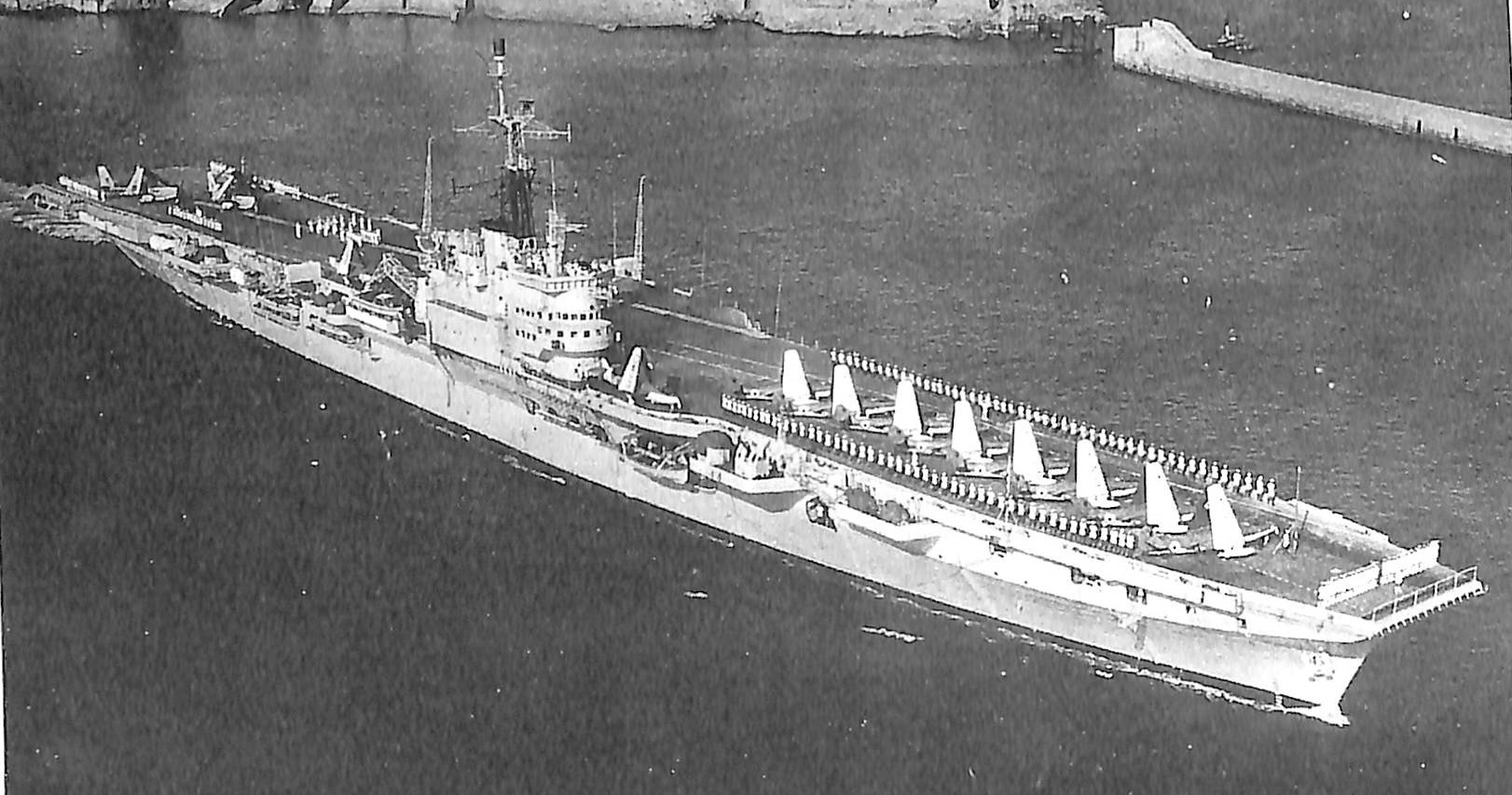
The Eastern Naval Command had under it an unnamed Frigate Squadron (with an attached destroyer), an unnamed ASW Frigate Squadron, 1 submarine and a Landing Ship Squadron. It also, of course, had the flagship INS Vikrant. These ships made up the Eastern Fleet. Its order of battle is given below.

Flagship:
- INS Vikrant (Majestic-Class, 25 aircraft)
Frigate Squadron:
- 1 x Destroyer, INS Ranjit
- 2 x Frigates, INS Brahmaputra and INS Beas
ASW Frigate Squadron:
- 2 x Frigates, INS Kamorta and INS Kavaratti
Landing Ship Squadron and Submarine:
- 1 x Submarine, INS Khanderi
- 3 x Landing Ships, INS Magar, INS Ghuriyal and INS Guldar
The Eastern Fleet was much smaller than its western counterpart but it simply didn’t need to be that big. The Western Fleet was facing the cream of the crop of the Pakistani Navy but the Eastern Fleet did not have even a single capital ship facing it. In total, the Pakistani Eastern Fleet had 4 patrol boats and 12 gun-boats. The only threat to the Indian Eastern Fleet was the lurking PNS Ghazi.

When war broke out, the Eastern Fleet was already at sea and had begun a blockade of Pakistan. Unlike the Western Fleet, which faced a looming Pakistani attack and had to plan accordingly, the Eastern Fleet’s role was to support the Indian Army in its offensive. The aircraft on the Vikrant began sorties immediately at the commencement of hostilities and bombed Chittagong harbour on the 3rd. Throughout the remainder of the war, the majority of the action the Eastern Fleet would undertake would be performed by the aircraft on the Vikrant. But, again, more on that later.
A Small Note on the Ghazi:

Ghazi was an American Tench-Class submarine which had been given only one objective; sink INS Vikrant. If given the opportunity, she could have achieved her aim and sunk the pride of the Indian Navy. But, on the 3rd of December, when she was idling outside the port of Visakhapatnam, waiting for Vikrant, she blew up. INS Rajput had spotted the submarine on SONAR and had engaged it and so, when Ghazi, blew up, Rajput claimed the kill. But, an investigation conducted long after the war – chronicled by the Indian Navy’s official historian, Vice Admiral G. M. Hiranandani – concluded that the Ghazi had not been damaged by Rajput but likely blew itself up due to a lack of maintenance and faulty ammunition. The wreck, located in 2003 by Indian Navy divers, seems to confirm that the Ghazi did indeed blow itself up.
Conclusion:
Like every front of the war, it seems that the Pakistan Navy was set up for defeat. However, unlike the other services, the Pakistan Navy’s ability to wage war was so thoroughly destroyed within the first 2 days of the war that they simply never managed to recover. To this day, the Indian Navy retains and maintains total superiority over the Indian Ocean Region.
Sources:
Brig. Siddique Salik, Witness to Surrender (Oxford University Press; 1979)
History Division, MoD, Official History of the 1971 Indo-Pak War (Chapters 11 and 15)
Commodore Ranjit Rai, A Nation and its Navy at War (Frontier India; 2015)
Hasan Zaheer, The Separation of East Paksitan (OUP Pakistan; 1996)
Maj. Gen. Fazal Khan, “The Pakistan Navy at War”, in Commodore Ranjit Rai (ed.), A Nation and its Navy at War (Frontier India; 2015)
Maj. Gen. Ian Cardozo, “Maritime Operations”, in In Quest of Freedom: The War of 1971 (CLAWS; 2016)

Leave a Reply