When the Indian subcontinent was freed of Imperial British rule in 1947, two nations were born; the Republic of India and the Islamic Republic of Pakistan. Pakistan itself was split in two; the Western Wing (what we know in 2023 as Pakistan) and the Eastern Wing (what we know now as Bangladesh). But in 1971, following a bloody civil war that required Indian intervention, Bangladesh was born.
But, why did Pakistan break in two?
The answer is complex. But, to put it simply, ever since 1947 the West Pakistanis (mostly ethnic Punjabis) viewed the Bengalis of East Pakistan as inferior. Over 50% of the nation’s population resided in the East, yet East Pakistan got nowhere near as much economic and infrastructure investment as the West. The Pakistan Armed Forces regularly chose Punjabis and other West Pakistanis as Officers and ignored the contributions of the Bengalis of East Pakistan. In 1952, when the West Pakistani establishment proposed making Urdu the national language of Pakistan and delisting English and Bengali, East Pakistan erupted in rebellion, which was only quelled in 1954 with the withdrawal of the proposal. The dam was bound to break.
And in 1970, it did.
Following 2 years of nationwide protests, in the 1970 Pakistani General Elections, Sheikh Mujibur Rahman (the president of a Bengali political party known as the “Awami League”) was elected to the office of Prime Minister of Pakistan as his party won a landslide victory in the elections. The then President of Pakistan, General Yahya Khan, refused to acknowledge this result and appointed a Prime Minister of his choosing, hoping to negotiate with the Awami League. But it came too little and too late.
By the time the Prime Minister, a Bengali politician known as Nurul Amin, was “chosen” by President Khan, the people of East Pakistan had had enough and broken out in protest of this dereliction of democracy, all throughout the country. The response was brutal.
As if that were not enough, East Pakistan was devastated by a cyclone – Cyclone Bhola. The cyclone made landfall on the 12th of November, 1970 and – because of a mixture of lax preparedness by the government despite repeated warnings, the already poor infrastructure and little to no relief efforts undertaken by the government in West Pakistan – over 300,000 Bengali people died in the worst tropical cyclone since 1873. All this came to a head on March 15th, 1971, when Sheikh Mujib uttered, in front of a crowd of tens of thousands, the immortal words:
“The struggle this time, is a struggle for our liberty. The struggle this time, is a struggle for our independence. Joy Bangla (Victory to Bangladesh)!”
-Sheikh Mujibur Rahman
Sheikh Mujib was arrested by the Pakistani government not soon after.
In response, the Pakistani government launched one of the worst genocides perpetrated against anyone since World War 2. In “Operation Searchlight”, beginning on March 26th, 1971 and ending only with India’s intervention in the war in December of the same year, the Pakistan Army with the assistance of Islamic-extremist paramilitary groups (the Razakars, Al-Badr and Al-Shams) murdered between 300,000 and 3 million ethnic Bengalis, raped between 200,000 and 300,000 Bengali women and displaced over 10 million people, who all fled to India.
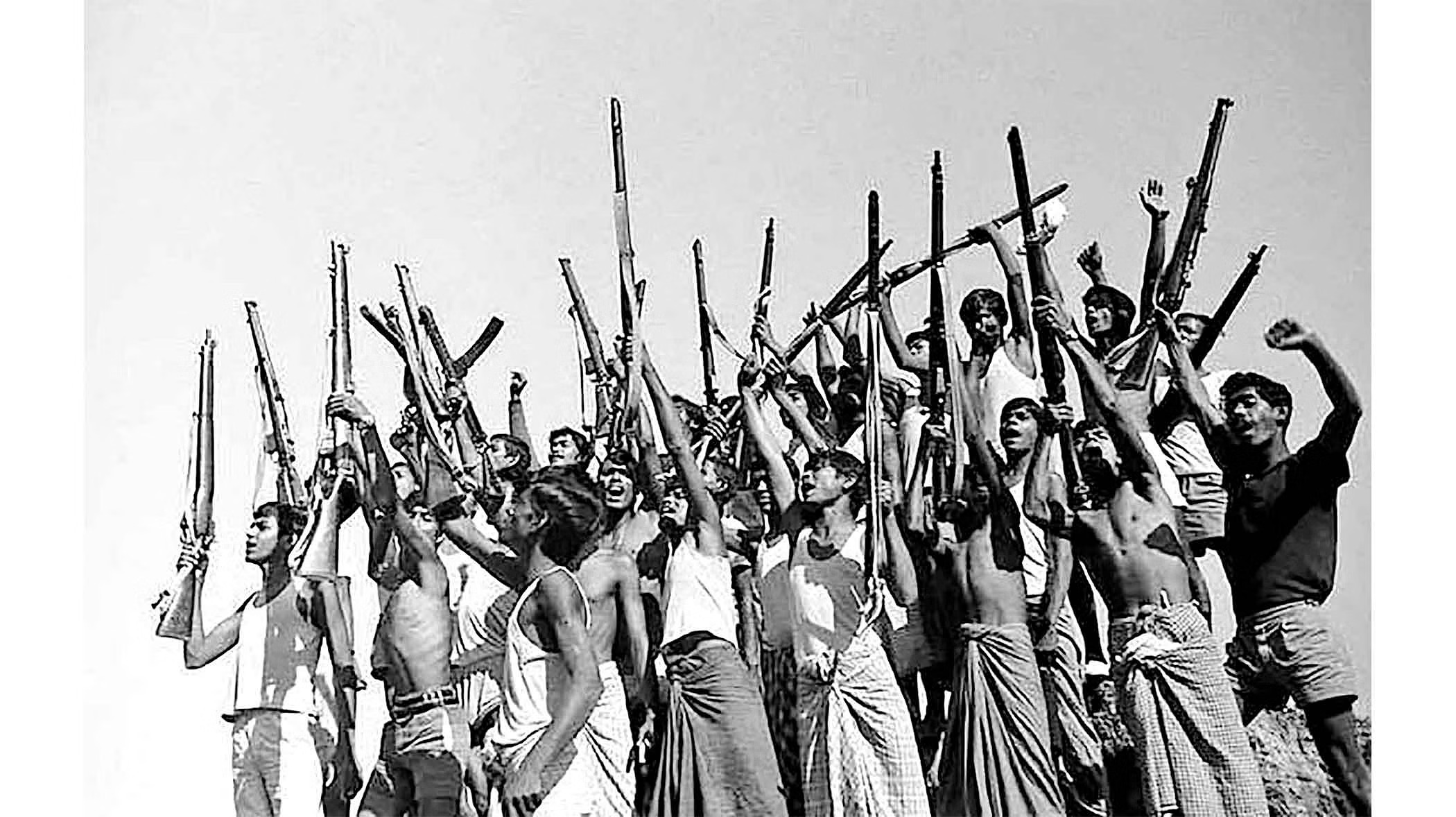
It was no surprise then that, in March, the Bengali people joined together to form the “Mukti Bahini” – translating literally to freedom fighters. The Mukti Bahini was made up of civilians and Bengali soldiers of the Pakistan Army, all united in their common goal – the independence of Bangladesh.
They were trained and supplied by the Indian Armed Forces and they wrought havoc in East Pakistan.
It was becoming clear, however, that India and Pakistan would soon be at war. And on December 3rd, it happened. The Pakistan Air Force bombed Indian Airbases and the Indian Army’s tank columns crossed into East Pakistan. By December 16th, it was all over and Bangladesh was born.
The articles in this series will enumerate the battles fought and the price paid to win this war in India’s finest hour.
